“You have to have a feeling for the organism.”
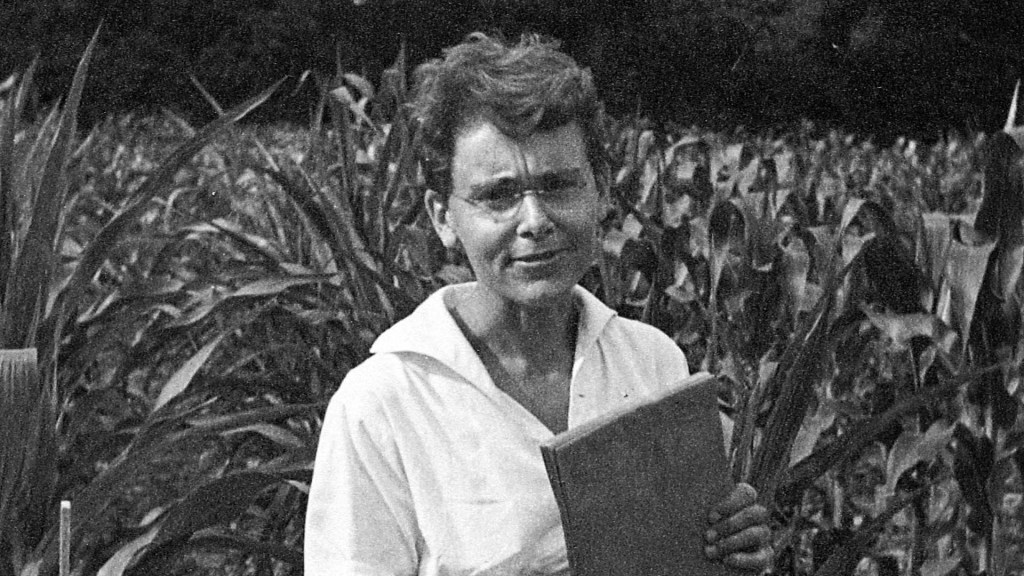
— Barbara McClintock, pictured below in a cornfield, c 1950s
My concern for the climate is rooted in something simple and enduring: a love of the living world, and a commitment to attending to it well. Think about the intelligence of forests, the steadiness of mountains, the improbable grace of birds, and the quiet resilience of ecosystems that have been learning how to live for far longer than any of our institutions. These are not merely objects of study: they are partners in a shared world, deserving of patience, care, and serious attention. The more I learn about how fragile these systems have become—and how deeply entangled they are with human choices—the harder it is to separate my work as a scholar from my responsibilities as a person.
Climate change and sustainability are not abstract concepts for me. They shaper how I think about responsibility, care, and the kinds of futures we make imaginable. From the perspective of virtue epistemology, knowing well is not just a matter of having the right information, but of cultivating attentiveness, humility, and responsiveness to what the world reveals. Indigenous and ecological ways of knowing remind us that understanding is relational: it arises through sustained engagement, respect, and reciprocity with the more-than-human world. The climate crisis exposes, with painful clarity, how failures of attention—alongside extractive habits of knowledge and power—have distorted what we see and how we act.
I am inspired by those who are reimagining what climate leadership can look like: scientists, organizers, artists, educators, and especially the voices gathered in All We Can Save. Their work emphasizes that responses to climate change are not only technical but ethical and relational. They depend on learning to listen, on building communities of care, and on treating knowledge as something we hold in trust for one another and for future generations.
These words are a small expression of that commitment. I hope to develop it more and to share reflections, resources, and invitations to act. I do believe that loving the world means entering into epistemic partnership with it (in all its aspects: natural and artificial), working for its flourishing, and accepting responsibility for how we know, measure, and inhabit the Earth.
None of us are too small, and it is not too late, to begin paying better attention.

